Community Recycling Programs Need Better Guidance for Old Pots and Pans
Worn cookware is often made of recyclable metal, but handles, coatings, glass lids, and mixed materials can make disposal confusing.
Read MoreInternational Journal of Sustainability for Young Scholars
Striving for Global Sustainability

Worn cookware is often made of recyclable metal, but handles, coatings, glass lids, and mixed materials can make disposal confusing.
Read MoreThe Ecological Cost of Lawn Culture A neatly trimmed green lawn is often treated as a symbol of order, beauty, and success. In many neighborhoods, it is the default landscape: a smooth carpet of grass, carefully watered, fertilized, edged, and mowed. But from an environmental perspective, the modern lawn is one of the least efficient and least ecologically useful ways to use land. What looks tidy to the human eye can be surprisingly costly in terms of water, energy, biodiversity, and pollution. Lawns are environmental monocultures. They are usually made…
Read MoreWhy do civilizations collapse? Is our civilization in danger? There are many reasons for the collapse of civilization: environmental destruction, natural disasters that humanity cannot handle, global warming, rising sea levels, deadly viruses, nuclear war, and oil depletion. Our current civilization is having a fatal impact on the Earth due to environmental destruction and waste since the Industrial Revolution. Or, just as the dinosaurs went extinct, we may perish due to a natural disaster that humanity cannot handle. So, is the current human civilization on the path to destruction? So…
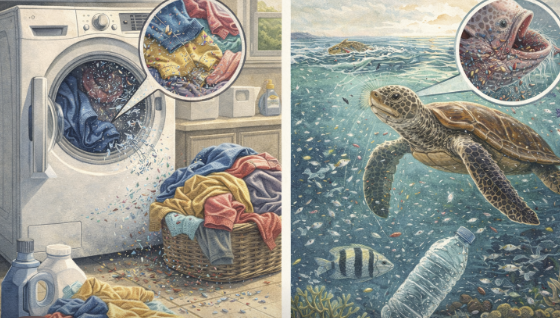
Read MoreThe Silent Spread of Microfibers When most people think about plastic pollution, they picture bottles, bags, or food wrappers floating in rivers and oceans. But some of the most widespread plastic pollution is nearly invisible. Every time we wash synthetic clothing such as fleece jackets, leggings, athletic shirts, or polyester sweaters, tiny plastic strands called microfibers are released into the water. These particles are so small that many slip through wastewater treatment systems and enter rivers, lakes, and seas. What looks like a clean load of laundry can quietly contribute…
Read MoreApp updates should preserve text size, contrast, captions, motion reduction, and other accessibility preferences unless a user changes them.
Read MoreOnline services should let users download useful records before an account is permanently deleted.
Read MoreEnvironmental monitoring produces a lot of data. Air-quality sensors collect pollution readings every few minutes. Weather stations record temperature, rainfall, humidity, and wind. Satellites capture images of forests, coastlines, cities, and farmland. Wildlife researchers use GPS tags, camera traps, and sound sensors to follow animal movements and populations. Collecting the data is only the first step. The harder part is turning it into something useful. This is where data science comes in. A typical environmental project may combine information from several sources. One dataset might come from sensors, another from…
Read MoreMedia, art, and science projects increasingly require tripods, yet school equipment can be difficult to locate when several classes share the same supply.
Read MoreShared hand trucks and dollies are useful for moving boxes, appliances, and heavy deliveries, but they often disappear into private units or storage rooms.
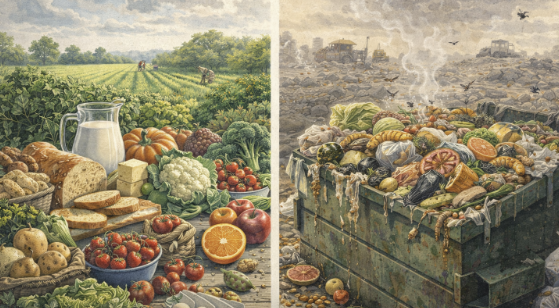
Read MoreThe Environmental Cost of Food Waste Most people think of food waste as a household budgeting problem or a sign of poor planning. We feel guilty when leftovers spoil in the refrigerator or when fruit goes soft before we eat it. But food waste is much more than a kitchen inconvenience. It is one of the most overlooked environmental problems in the modern world. When food is wasted, we are not just throwing away something edible. We are also wasting the land, water, energy, labor, fertilizer, fuel, and packaging that…
Read More