The Environmental Cost of Food Waste
The Environmental Cost of Food Waste
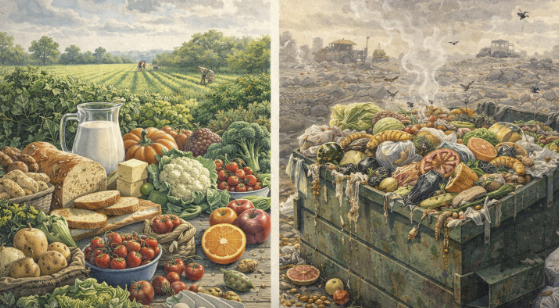
Most people think of food waste as a household budgeting problem or a sign of poor planning. We feel guilty when leftovers spoil in the refrigerator or when fruit goes soft before we eat it. But food waste is much more than a kitchen inconvenience. It is one of the most overlooked environmental problems in the modern world. When food is wasted, we are not just throwing away something edible. We are also wasting the land, water, energy, labor, fertilizer, fuel, and packaging that were used to produce it.
The scale of the issue is enormous. Food is lost at every stage of the supply chain: on farms, during transportation, in grocery stores, in restaurants, and in homes. Some produce is discarded because it is misshapen or visually imperfect. Some is damaged in transit. Some is overstocked and never sold. And a large amount is simply bought by consumers with good intentions and then forgotten. Individually, these moments may seem small. Collectively, they add up to a major environmental burden.
One of the biggest hidden costs of food waste is water. Agriculture uses vast quantities of freshwater to grow crops and raise animals. When food is thrown out, all of that water is effectively wasted too. The same is true of land use. Forests may be cleared for agriculture, soils may be intensively farmed, and habitats may be disrupted to produce food that is never actually consumed. In a world already facing water stress, biodiversity loss, and pressure on farmland, wasting food means worsening environmental damage for no benefit at all.
Food waste is also closely tied to climate change. When organic waste ends up in landfills, it breaks down without enough oxygen and produces methane, a powerful greenhouse gas. At the same time, the machinery used in agriculture, food processing, refrigeration, and transport often depends on fossil fuels. So wasted food has a double climate impact: emissions from producing it, and additional emissions from disposing of it.
There is also a social dimension that makes the problem harder to ignore. Millions of people face food insecurity, yet large amounts of edible food are discarded every day. That does not mean all wasted food could be easily redirected to those in need, since logistics, safety regulations, and timing matter. Still, the contrast reveals how inefficient the system has become. We produce enough food to feed many more people than we do, yet poor distribution and waste prevent that potential from becoming reality.
The good news is that reducing food waste is one of the most practical environmental actions available. Households can plan meals more carefully, understand expiration labels more accurately, freeze excess food, and get more comfortable eating leftovers. Stores and restaurants can donate surplus food, improve inventory systems, and stop rejecting edible items for cosmetic reasons alone. On a broader level, governments can support food recovery programs, composting infrastructure, and public education on waste reduction.
Food waste is often invisible because it disappears into trash bags and dumpsters, but its environmental consequences do not disappear with it. Every meal we save from the bin reduces pressure on ecosystems, conserves resources, and lowers emissions. In environmental terms, wasting less food is not a minor personal habit. It is a meaningful act of stewardship.