One Step Ahead: How Biomedical Tech is Redefining Early Detection
One Step Ahead: How Biomedical Tech is Redefining Early Detection
For most of medical history, the doctor-patient relationship began only after something went wrong. We waited for the persistent cough, the sudden pain, or the unusual lump to drive us into a clinic. By the time an illness is loud enough to be felt, however, it has often already gained a head start. One of the most profound shifts in modern medicine is the rise of biomedical technology that refuses to wait for symptoms. We are moving toward an era where we can hear the “whispers” of a disease before they turn into a shout, fundamentally changing the odds for patients and transforming health from a reactive struggle into a proactive strategy.
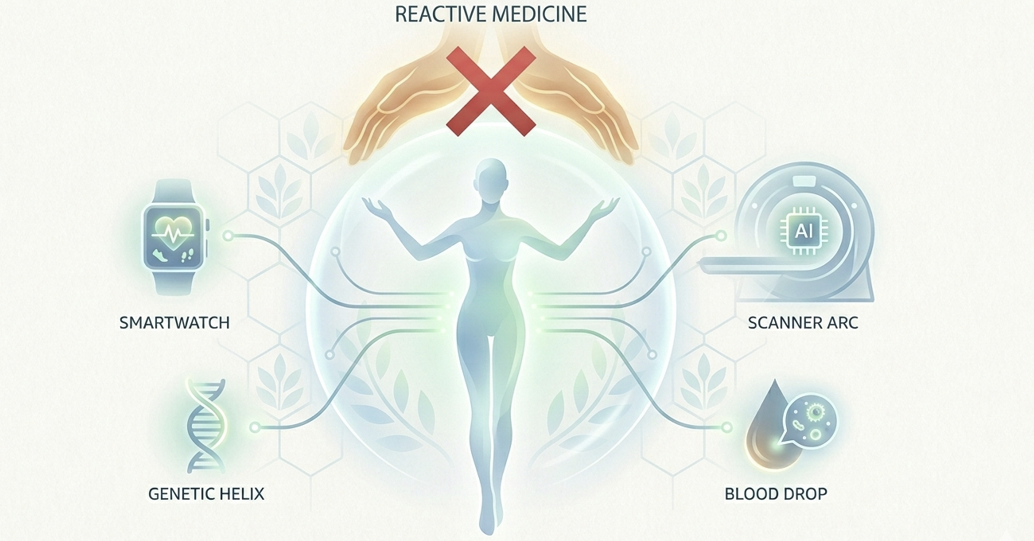
At the heart of this change is our newfound ability to listen to the body’s data in real-time. In the past, a doctor’s visit provided only a tiny snapshot of your health—a single blood pressure reading or one heart rate check. Today, wearable devices and continuous monitors act as a 24/7 film crew, capturing the slow-developing patterns that a ten-minute checkup would inevitably miss. Whether it is a smartwatch flagging an irregular heart rhythm or a tiny sensor tracking glucose levels around the clock, these tools allow us to catch the subtle “glitches” in our biology long before they cause a crisis.
Beyond wearables, the science of biomarkers is allowing us to look deep into our molecular makeup. Researchers are now able to spot specific proteins or genetic mutations that act like breadcrumbs leading back to conditions like cancer or Alzheimer’s. A simple blood test may soon be able to screen for dozens of cancers in their infancy, when they are at their most treatable. This is paired with incredible leaps in medical imaging, where high-definition scans and artificial intelligence work together. AI doesn’t replace the radiologist; instead, it acts like a high-powered lens, highlighting tiny abnormalities in an MRI or CT scan that might be invisible to the human eye, ensuring that nothing important slips through the cracks.
Perhaps the most exciting part of this technological boom is how personal it has become. We are moving away from “one-size-fits-all” medicine toward a model where your specific genetic code helps dictate your care. Genetic testing can now tell us not just what diseases you might be prone to, but which medications your body will actually respond to. This level of personalization means that when a technology detects a risk early, the follow-up plan is built specifically for your biology, making the entire healthcare process more precise and far less of a guessing game.
Of course, this new frontier isn’t without its growing pains. High-tech medicine is often expensive, raising the risk that only those with deep pockets will benefit from early detection. There are also very real concerns about data privacy and the psychological toll of “false alarms.” We have to ensure that as we get better at finding problems, we also get better at explaining them and ensuring equal access to the solutions. An early warning is only a gift if it leads to a clear, affordable path forward.
Ultimately, we are witnessing the end of “wait-and-see” medicine. Biomedical technology is shifting the focus from treating the sick to maintaining the healthy. By staying one step ahead of illness, we are not just extending lives; we are improving the quality of those years. We are learning to solve the puzzle of our health while we still have all the pieces in hand, rather than trying to fix it after it has started to break apart.
KHAI MINH (STEVEN) TRAN