The Silent Spread of Microfibers
The Silent Spread of Microfibers
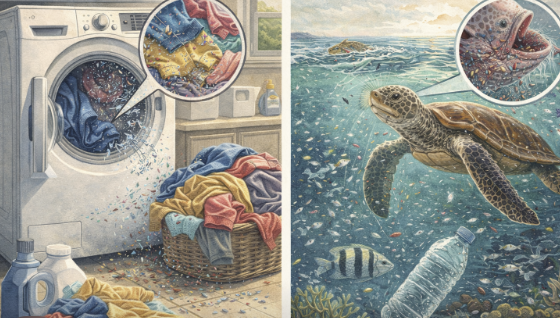
When most people think about plastic pollution, they picture bottles, bags, or food wrappers floating in rivers and oceans. But some of the most widespread plastic pollution is nearly invisible. Every time we wash synthetic clothing such as fleece jackets, leggings, athletic shirts, or polyester sweaters, tiny plastic strands called microfibers are released into the water. These particles are so small that many slip through wastewater treatment systems and enter rivers, lakes, and seas. What looks like a clean load of laundry can quietly contribute to a growing environmental problem.
Synthetic fabrics are made from materials such as polyester, nylon, and acrylic, all of which are forms of plastic. As these textiles rub against each other in the washing machine, they shed microscopic fibers. A single wash can release thousands or even millions of these particles depending on the fabric, water temperature, and wash intensity. Because they are too small to be easily seen, they rarely attract public attention. Yet they are now found almost everywhere scientists look: in ocean water, deep-sea sediment, Arctic snow, drinking water, and even the air indoors.
Once microfibers enter natural ecosystems, they are extremely difficult to remove. Fish, shellfish, and other aquatic organisms can ingest them by mistake. These fibers may not provide nutrition, but they can still occupy digestive systems, stress organisms, and carry chemical additives or pollutants on their surfaces. The problem does not stay underwater. Because microfibers move through food chains, they can eventually reach the animals and people who eat seafood. Their long-term health effects are still being studied, but the spread alone is reason for concern.
Microfiber pollution also reveals a larger truth about modern consumption. Fast fashion encourages people to buy cheap synthetic clothing that is often worn briefly and washed frequently. That means the problem is tied not only to laundry habits, but also to how the clothing industry produces and markets garments. A low-cost polyester shirt may seem harmless on the rack, yet over its lifetime it can shed plastic repeatedly into the environment.
The good news is that this is a problem with practical solutions. Consumers can wash clothes less often, use colder and gentler cycles, choose full loads, and air-dry when possible to reduce friction. Special laundry bags and external washing machine filters can capture many fibers before they escape. Buying fewer clothes and choosing durable natural fibers when appropriate can also help. On a larger scale, manufacturers can design textiles that shed less, and governments can require better filtration standards in appliances and wastewater systems.
Microfibers remind us that environmental harm does not always arrive in dramatic form. Sometimes it comes from ordinary routines repeated millions of times a day. The clothes we wear, wash, and replace are connected to rivers, oceans, and food webs in ways that are easy to overlook. If we want a cleaner future, we need to pay attention not only to the big pieces of waste we can see, but also to the tiny ones we cannot.